Click on any image for a slideshow!

Fallin' for Mosquitoes and Hurricanes
The Third Quarter Report from the Calgary Mosquito Society
In the previous quarter we set a new record for the number of volunteer hours invested in a quarter. Yea us! This quarter, we broke that record by over 13%, with 2613 hours. Wow you! Thanks folks.
Most of the increase can be attributed to the crew reinstalling the Hurricane engine. That went fairly well, but there are more problems. Forge ahead to find out what, where and why.
Hurricane
Lots on the go this quarter for our dear old Hurricane. The engine was one of the stars of the show on Mosquito Day down at the Bomber Command Museum on July 18 with a morning and an afternoon run. Since our first successful run in December 2024, we have done dozens of runs, solved lots of small issues, and racked up a total of an hour and twenty-four minutes run time on the engine.
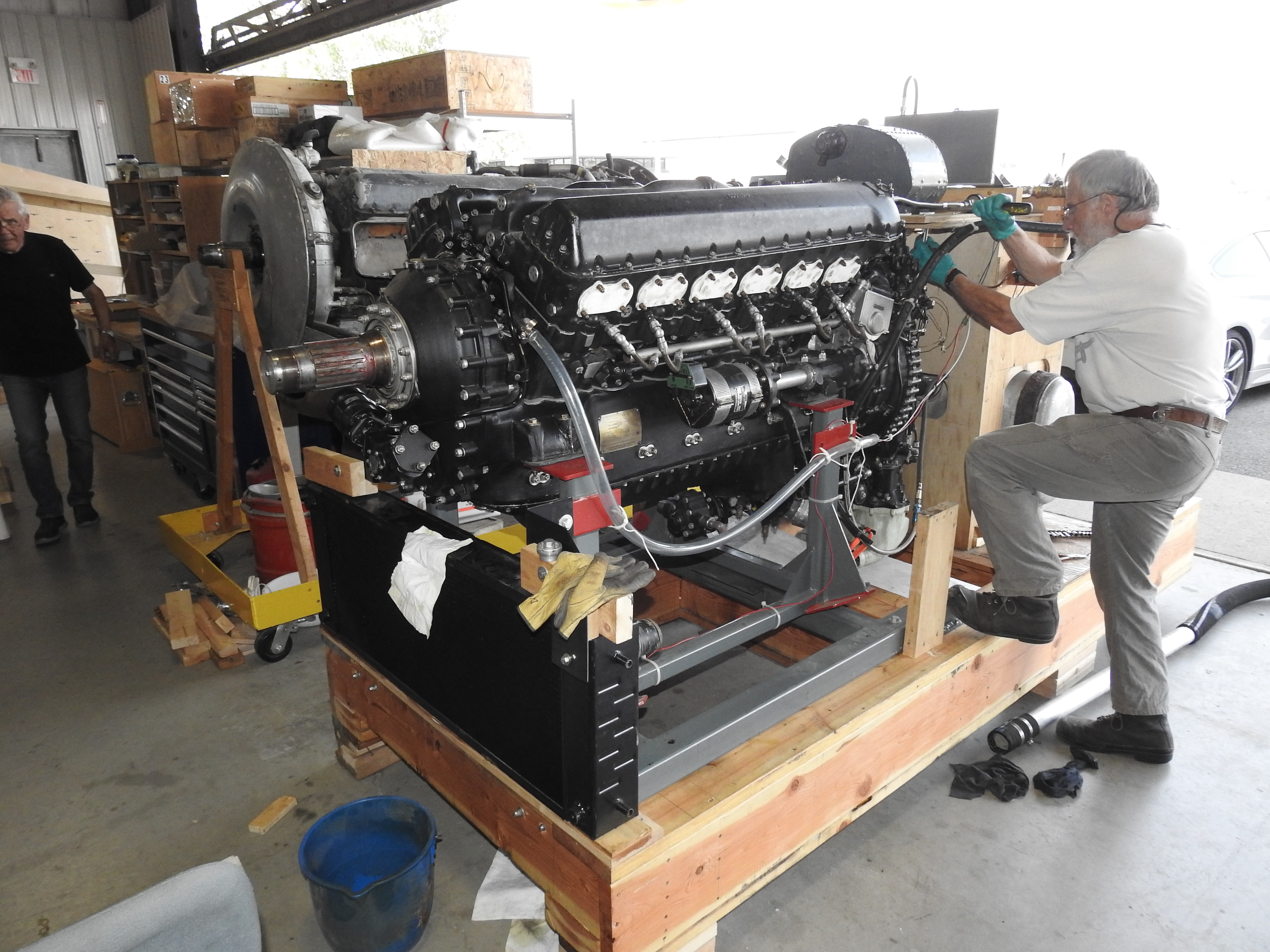
CMS Super Volunteer Davy D. begins the process of stripping the Merlin test stand so that we could move the engine from the Bomber Command Museum to the Hangar for re-installation in the Hurricane in late July.
Right after Mosquito Day, we started freeing the engine from its test stand in order to move it to the Hangar Museum and install it back into the airframe. The team, led by Jack M. included Davy D., Dick S., Andy W., Jordan F., Matthew S. and Dr. Brian T. from the Bomber Command Museum.
We moved the engine on July 29th and began the installation process, first removing the propeller and non-running engine from the airframe. Over the next few weeks, the team put in hundreds of hours getting it mounted back in the Hurricane, getting the propeller installed and hooking up the fuel, oil, electrical, coolant systems and all of the instrument connections. Frustrations and busted knuckles abounded...
On the last day of August, Andy and Davy tested the coolant system. It failed miserably. Pressurized to just one pound per square inch, all the fluid hit the floor in a gush, so off came the radiator/oil cooler assembly. Prior to installing the radiator in the airframe back in 2018, we did have it tested, serviced and repaired. Now at 84 years of age, copper alloy tubing and solder have all but given up the ghost. Boardie Michael H. took the rad to City Wide Radiator Ltd., who were our 'go to' eight years ago. After a month of squeezing it in between paying jobs, City Wide finally had to call it quits and told us to come and get it. Every time they plugged a corroded tube or patched a solder joint, two more let go. Re-coring seems to be the necessary fix.
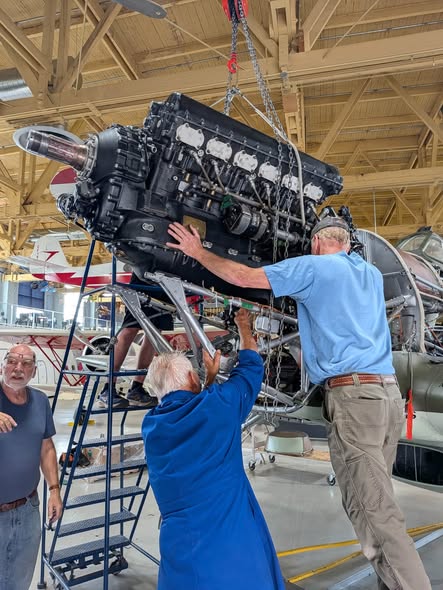
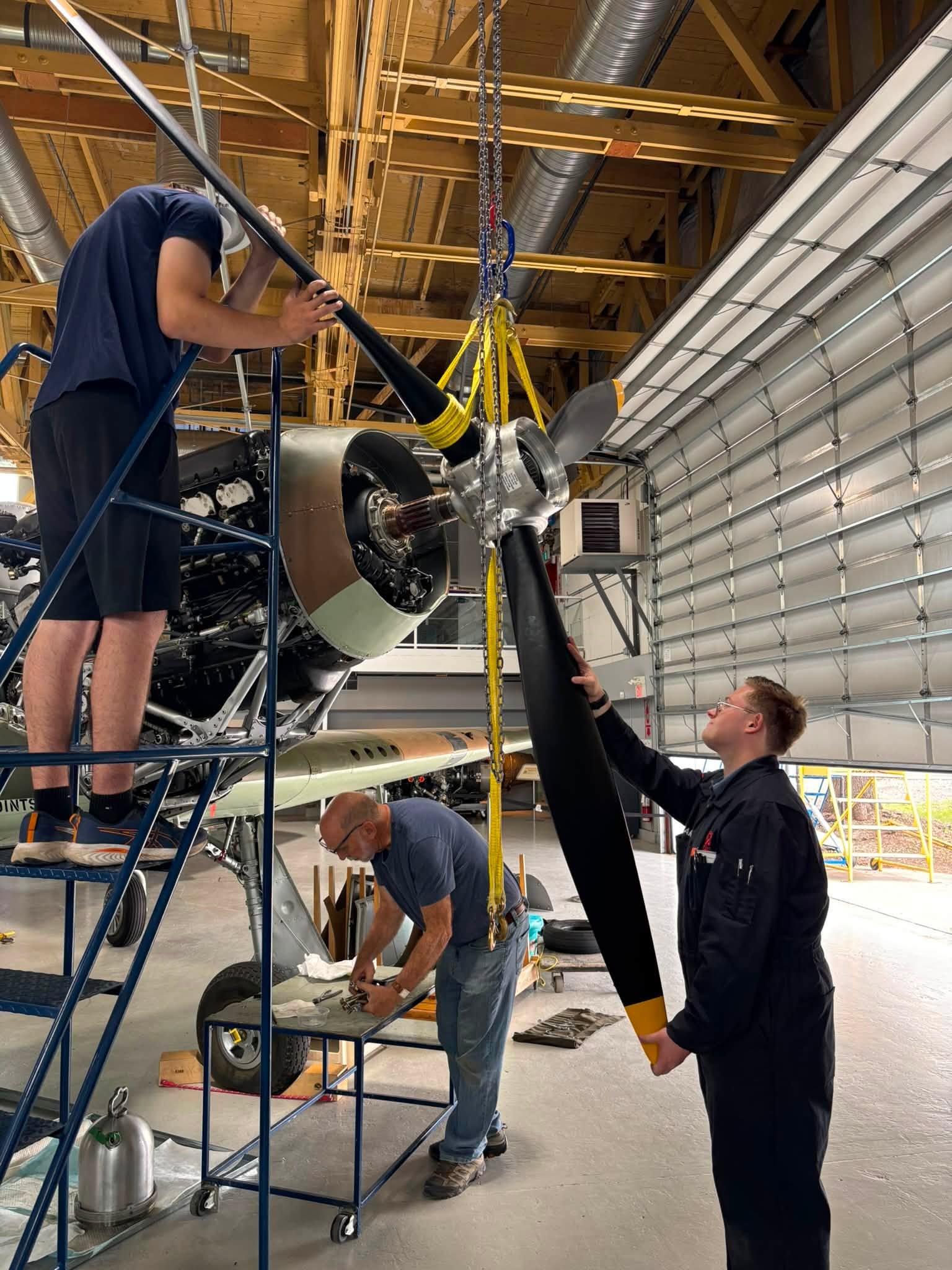
Top, high flying Merlin 29 being re-installed in the Hurricane with Jack on supervision duty, Dick S. and Dr. Brian T. doing the steering. Bottom, our next generation crew of Matthew S. and Jordan F. swing the propeller into place. (Photos Dick Snider)
We were not sitting idly by as City Wide did their best throughout September. We talked to a number of industrial coolant specialists here in town and as far south as Lethbridge. We located a shop in New Zealand and another in the UK who have built new cores for Hurricane radiators. After all of the local vendors looked at it and shook their heads, this may be our only/best option. Regardless of which solution we pursue, any prospect of running the airplane before next spring is off the table.
In the process of removing the radiator we discovered that a lever for the louver system was broken. Andy W. removed it and created a new one with the assistance of the metal skills of Gary T.
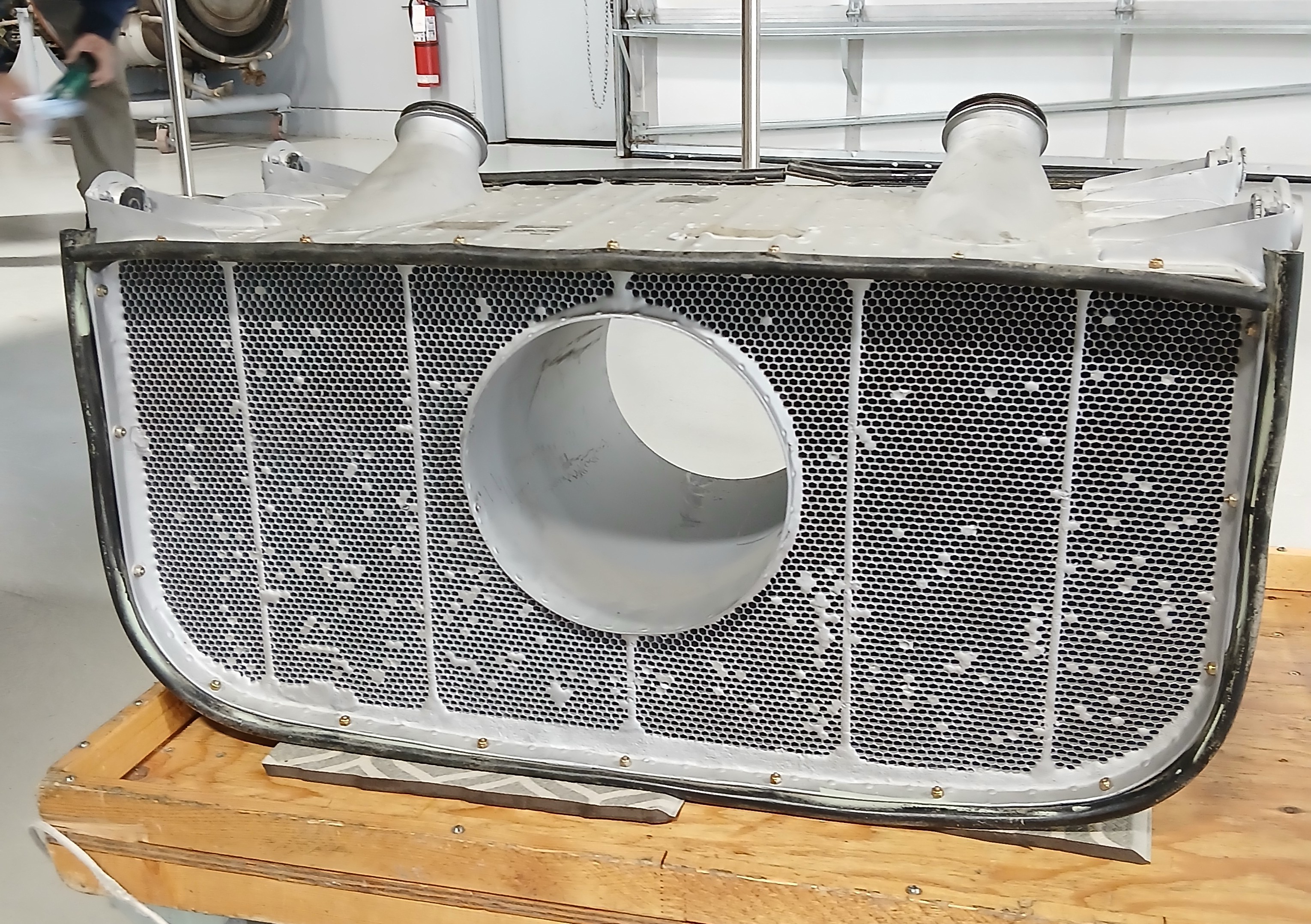
The very porous and very troublesome radiator. Each of those little holes is a copper alloy tube. The big hole in the center is where the oil cooler goes. The 'dots' are tubes that were leaking and were plugged by City Wide Radiator back in 2018. A new core may be the only solution. Stay tuned.
In mid September the Hangar had a weekend event and had to move the Hurricane.
When pushing it back into the building with the 'new-to-them' tug, the tail wheel dolly got stuck and flipped up into the underside wood and fabric structure, just forward of the tail wheel.
In consultation with the Hangar we have agreed to a repair plan that will see Barry Halliwell repair the structure and then it will get sent to Penhold where 'best in the country' fabric and paint specialists, Gary Hillman and Jodi Smith will give it a new finish. We contacted Historic Aviation Services in Wetaskiwin and were pleased to discover that they had kept all the leftover paint, so matching will not be a problem.
Thanks to Bomber Command Museum curator and board member Karl K. for fetching the paint on his most recent trip to Wetaskiwin.
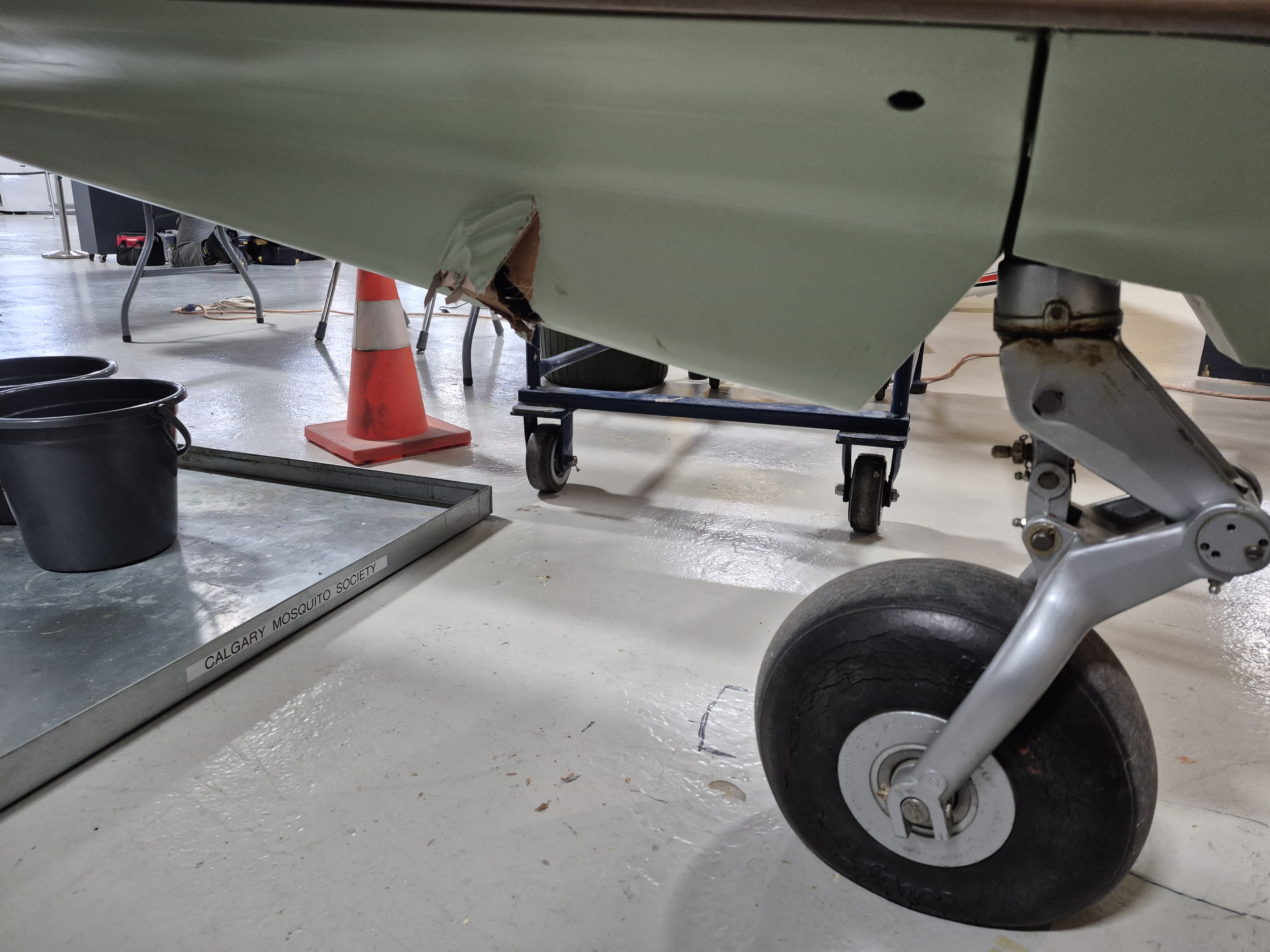
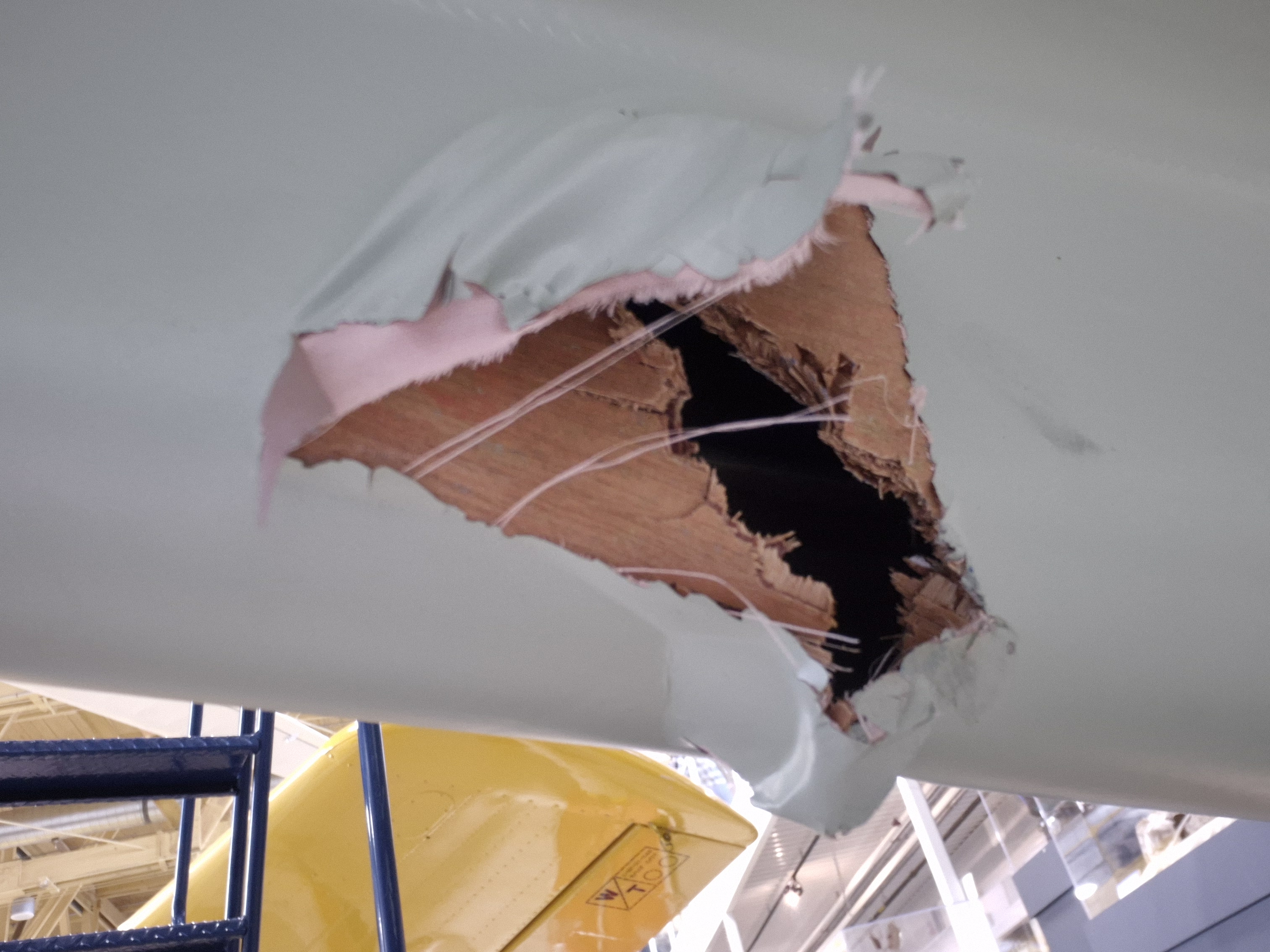
The wood and fabric keel of the Hurricane just forward of the tail wheel. This section of wood structure was removed from the last Hurricane to enter RAF service in 1944. It was replaced during a 1994 restoration and we acquired it from a dealer in the UK.
Mosquito
Nothing too radical to report on the Mosquito front: Just lots of steady progress throughout, with teams on the trailing edge of the wing, the underside of said wing, the cockpit and the inside rear fuselage.
Don H. continues to work the rear fuselage, including the camera bay and camera operator's work station. His area got a nice boost when we were contacted by Mark Peapell of the Atlantic Canada Aviation Museum out of Halifax, NS. They had a 'new in the box' intervalometer (automatic timer to trip the camera shutter. {Ya, I had to look it up}) that looked to be the right type for our airplane, and did we want it? Yes, and please! Thanks also to their Executive Director Barry Rodenhiser for getting it shipped out to us. Don had recently refinished the mount in which this thingy fits, and he was able to pop it right into place. Sweeeeet!
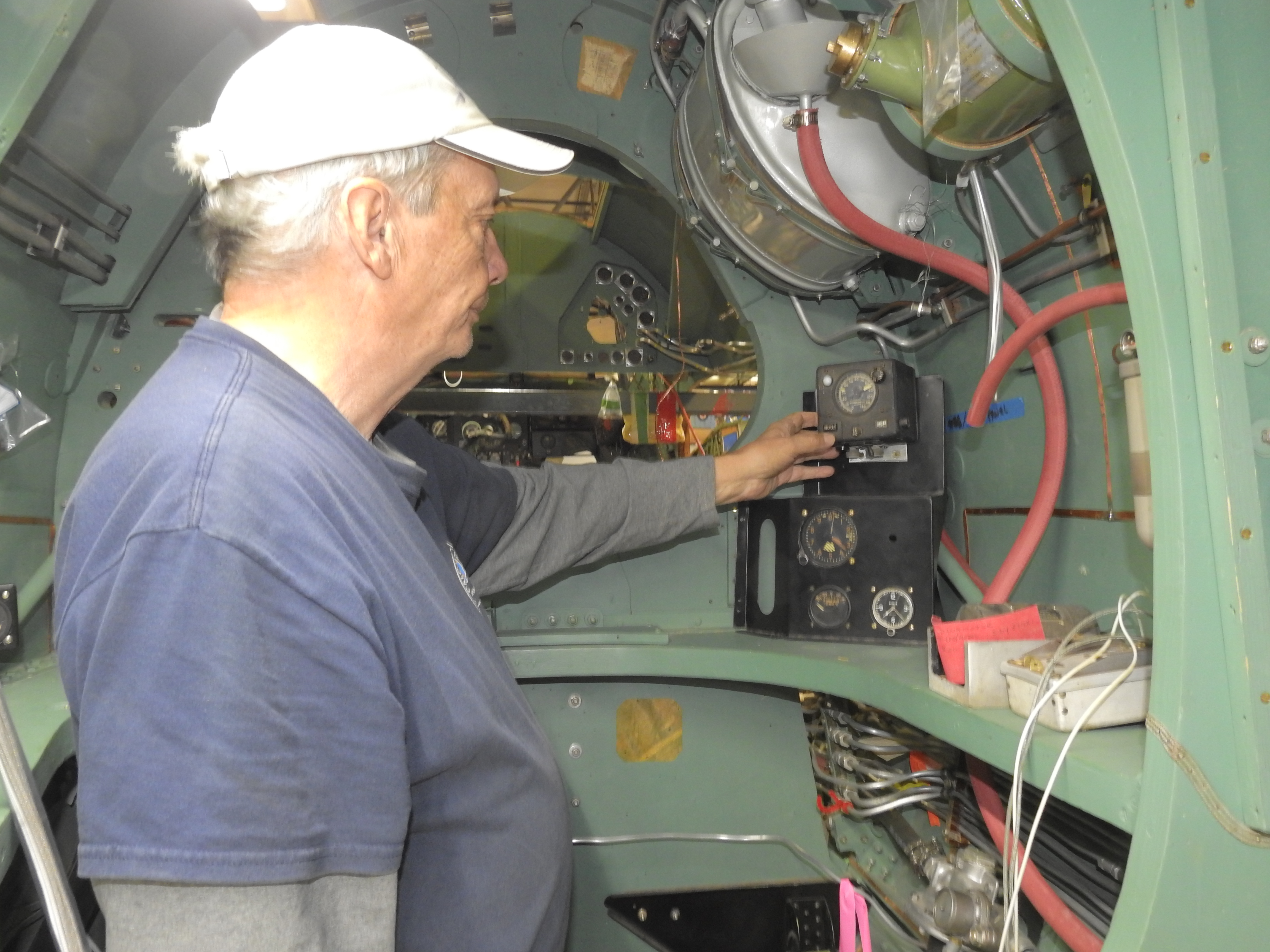
Don H. fits the newly acquired intervalometer into the bracket above the camera bay. Our thanks to the Atlantic Canada Aviation Museum for donating this item to us. Perfect piece and a perfect fit!
Don is also busy rebuilding the fuel dump system. Back in the day when Spartan Air Services started using the Mosquito with a camera operator in the rear fuselage, Transport Canada told them that if they were going to do that, they had to create a system to dump all the fuel from 13 tanks, as they wanted to give the new guy in the back a fighting chance to survive a crash and not be sitting in the slipstream of 800 gallons of high octane avgas. The lines are both aluminum and rubber and run down the port side of the rear fuselage and out the tail stinger. With little surviving documentation detailing this system, Don is having to figure out a lot of it from scratch.
In the front end of the fuselage, Andy W. has been busy with lots of fiddly bits, including fabricating the bracket for the de-ice pump, then installing said pump along with its lines, repairing a micarta panel in the crew entrance way, and modifying a bracket for the hydraulic buffer unit.
As always, Andy is also on the look out for radio, navigation and oxygen system components, and scoring a couple more finds this past quarter with two oxygen blinkers and a radio compass amplifier.
Davy D. is working on the first of two undercarriage retract jacks as well as the starboard aileron quadrant for the cables, pulleys and castings. He has managed to pull the retract jack apart and found the metal to be in good condition, but the seals having turned to rubber mush. Until we can find suitable replacements, Davy may have to settle for assembling the jacks, less seals and then replace the seals down the line.
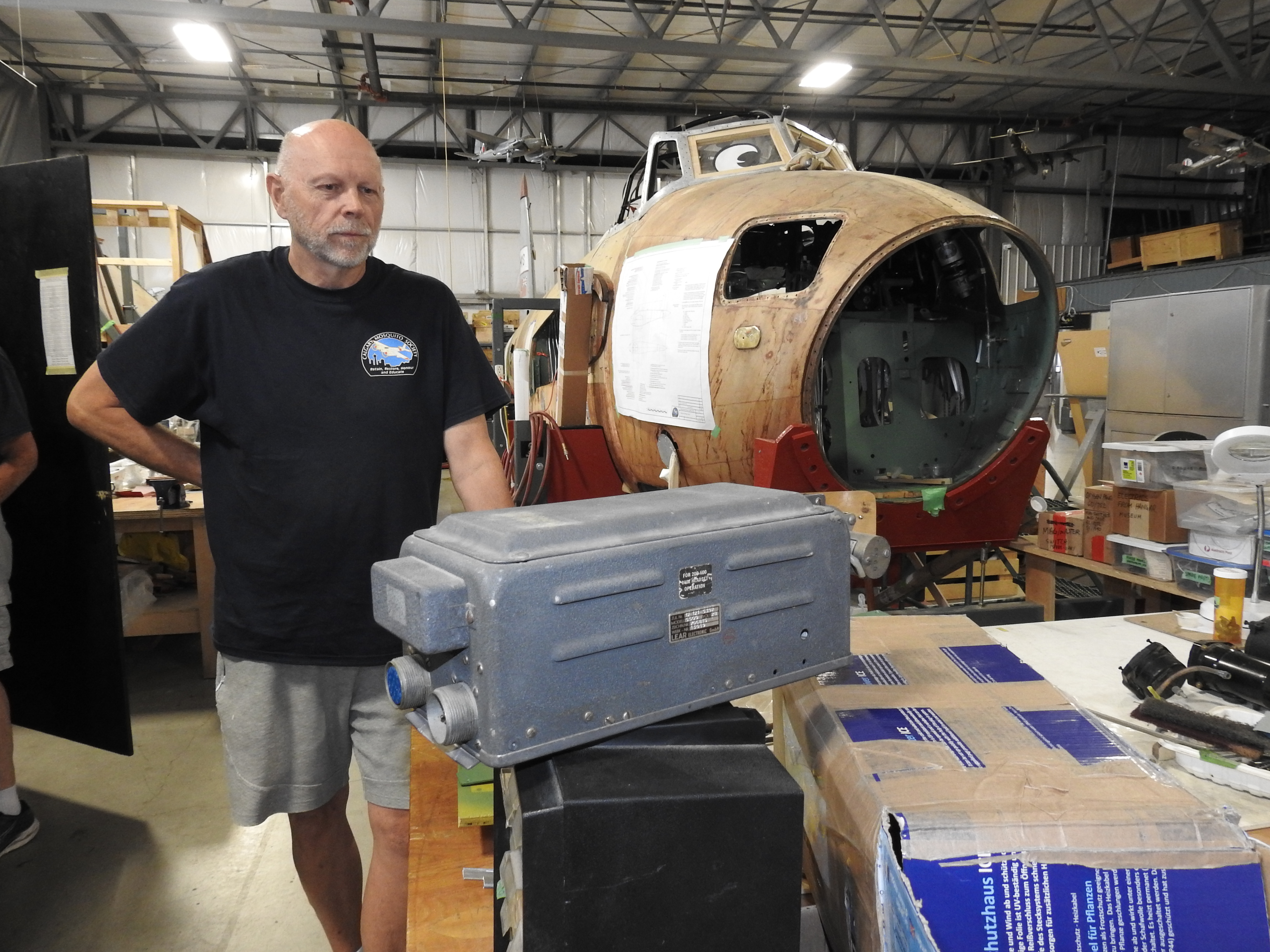
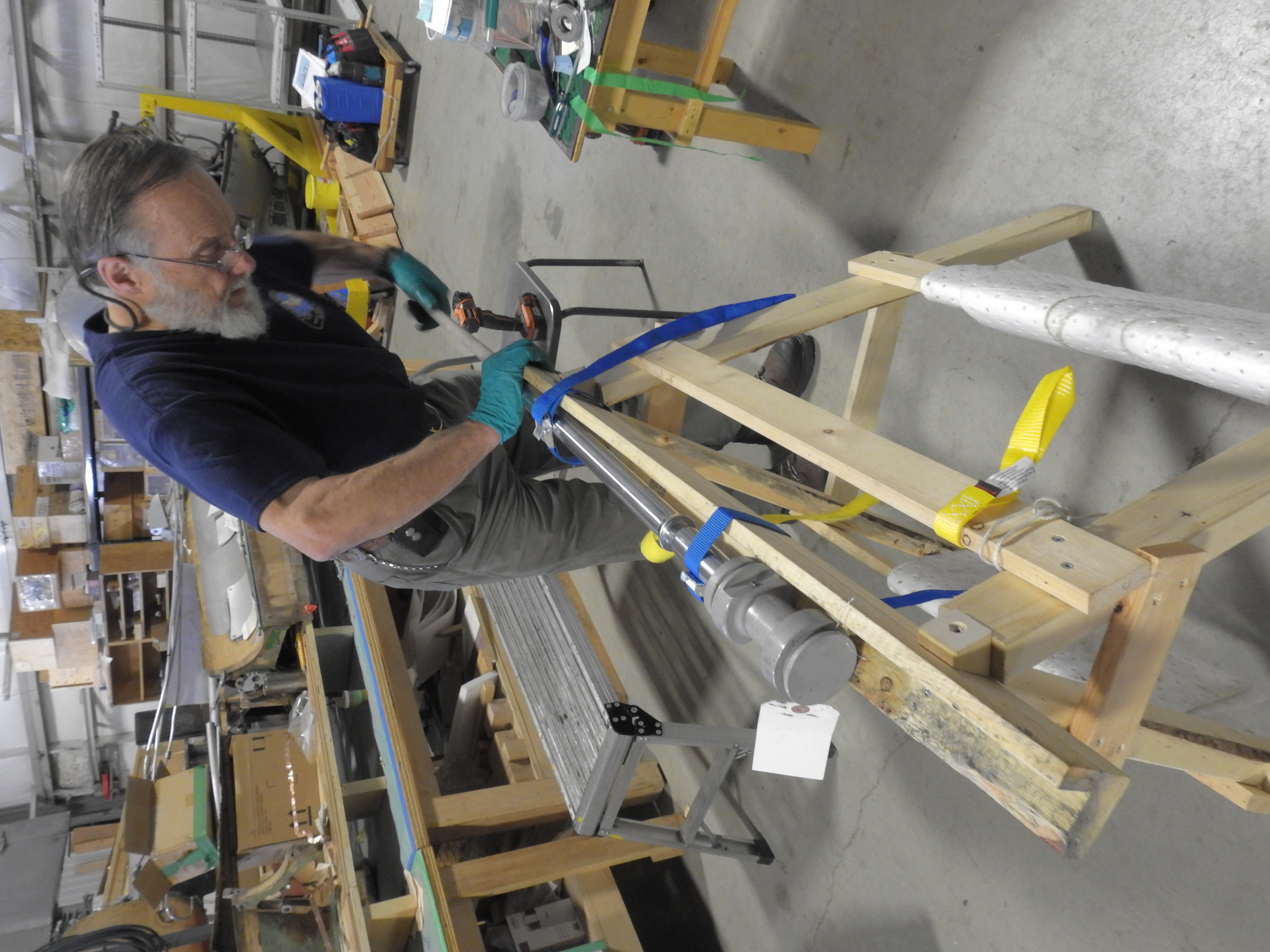
Top, Andy W. with his newly acquired radio compass amplifier. Bottom, Davy D. with the innards of one of the undercarriage retract jacks. Good metal, but bad seals.
In the jack department, Trevor J. is nearing the end of his lengthy project to assemble two good flap hydraulic cylinders as well. He is challenged by the same issues as Davy in needing new seals to complete them.
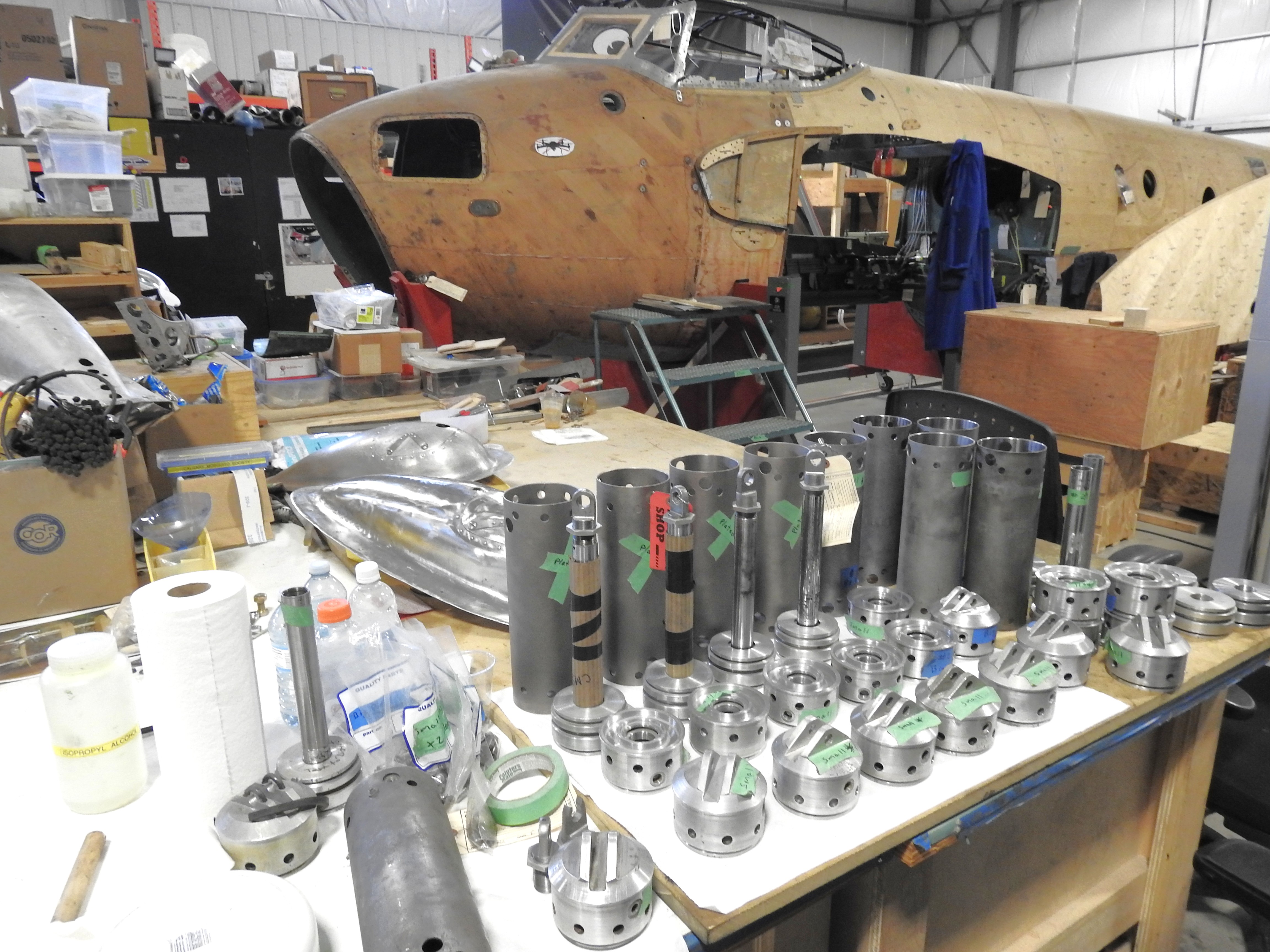
Trevor J’s work bench with all of the flap hydraulic cylinders. As marked, the two on the left are the one’s we will use with the next two as spares and everything else being relegated as ‘trade goods.’
That aside, having started with a rag tag batch of nine jacks, he has been able to find enough serviceable bits to put a good pair together, along with two spares and a goodly number of bits and pieces for trade. For the serviceable pair, the cylinders have been honed and the piston rods re-chromed, but again we are lacking seals for these as well.
Alan W. has been doing a lot of cleaning on grounding straps, hydraulic and pneumatic lines, as well as paint prep and painting things like floor panels and wing pulleys.
The trailing edge and underside of the wing keeps a lot of our crew busy. Jerry M. noted a milestone achievement in completing the flap cylinder attach point on the trailing edge of the wing. With the help of some of the younger lads like Alex and Zach M. and new boy on the block Vonya, everything was tightened up just this past weekend. Our thanks also to Don Bayley and Barry Halliwell at the Hangar museum for once again machining new custom threaded studs for us to allow these bits to be reinstalled. The only step remaining is to finish torquing all the hardware to the proper numbers.

Jerry M. putting some of the finishing touches on the starboard side flap jack mounting point. Once we establish the proper torque, both sides will be complete. Lots of steps, processes and hands involved in this one.
Most of the metal pieces have gone for powder coating which gives everything the most durable finish possible, but sadly all of the parts and identification tags get separated from each other in the process and we end up with a box of freshly finished pieces and a second box of parts tags. Time to play 'what goes where?', which considerably complicates the process.
Jerry has also been working with Michael H. on refitting all the castings, brackets and electrical conduits that run through the fuel and undercarriage bays. Dick S. has also been helping out by fixing and building new brackets. This entails a lot of reference to photos to figure out where everything goes, as well as hunting down the 'everythings' when they get waylaid or misplaced in a process that often involves different volunteers over a span of years.
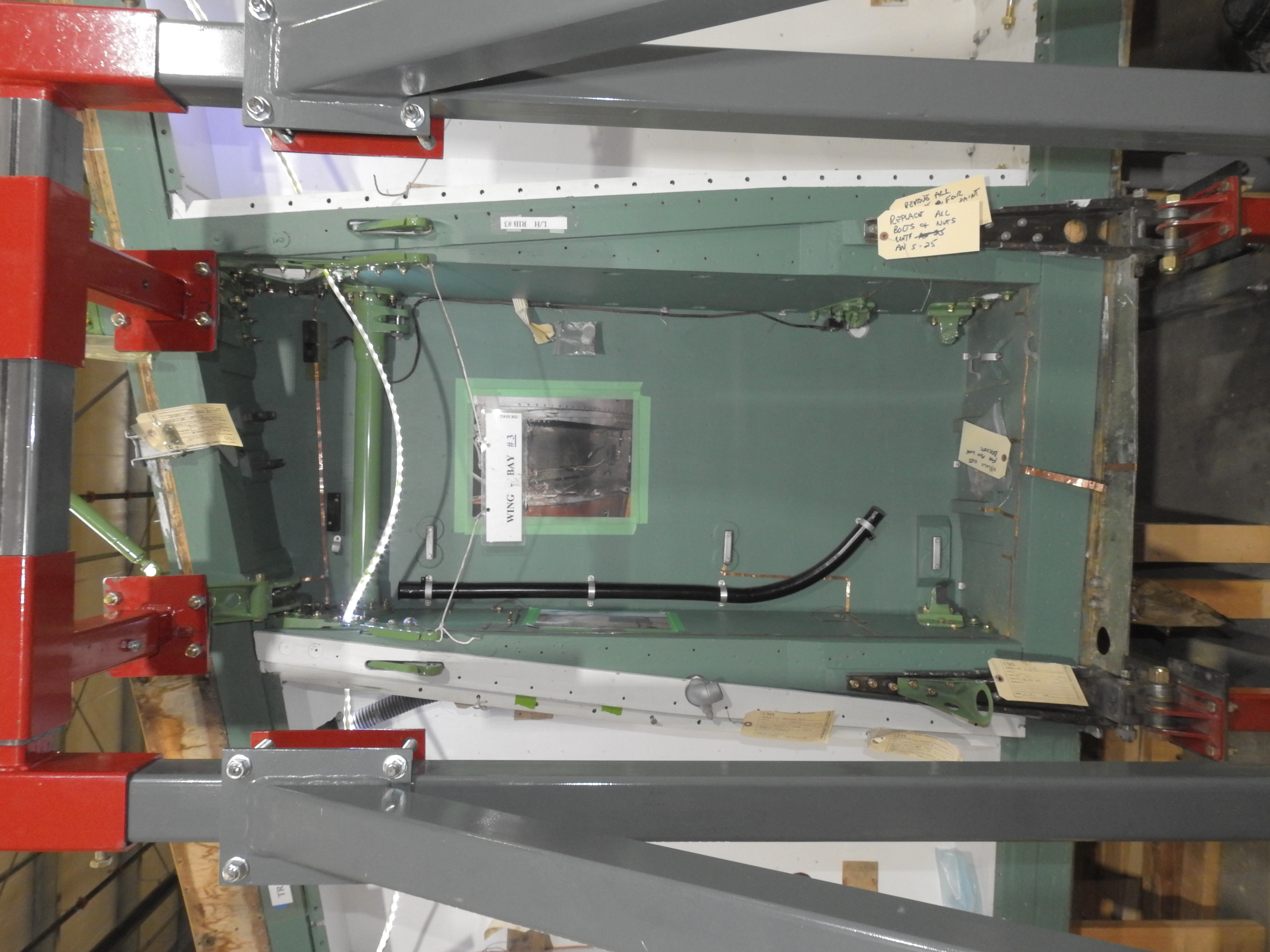
This is the port side wheel well, with which Michael H. is very familiar, having sorted out all the bits and pieces for re-installation. Note the conduit on the left and all the little brackets holding it in place. This is just the larger and more obvious part of the job. There are hundreds and hundreds of fiddly bits throughout the wells and fuel bays that have been removed and restored that now have to go back into position.
On the wood side of things, Gary T. is working to rebuild the trailing edge ribs that extend from the rear spar. Assisting in this process is Al P., who applies his years in major building construction to the matter of plans and documents for the trailing edge bits and pieces. Al has also been getting his hands dirty cleaning and stripping areas of the rear spar where sections have been damaged or afflicted by rot.
This area of the wing was also badly damaged when the airplane went to Cold Lake in 1989-'91. As the wing and trailing edge taper, each of the dozens of ribs is a different size, requiring Gary to build a new jig for each rib. Just to add to the fun, all of the ribs are also 'handed', meaning that the left and right sides of the wing ribs are mirror image to each other, so that no two are the same.
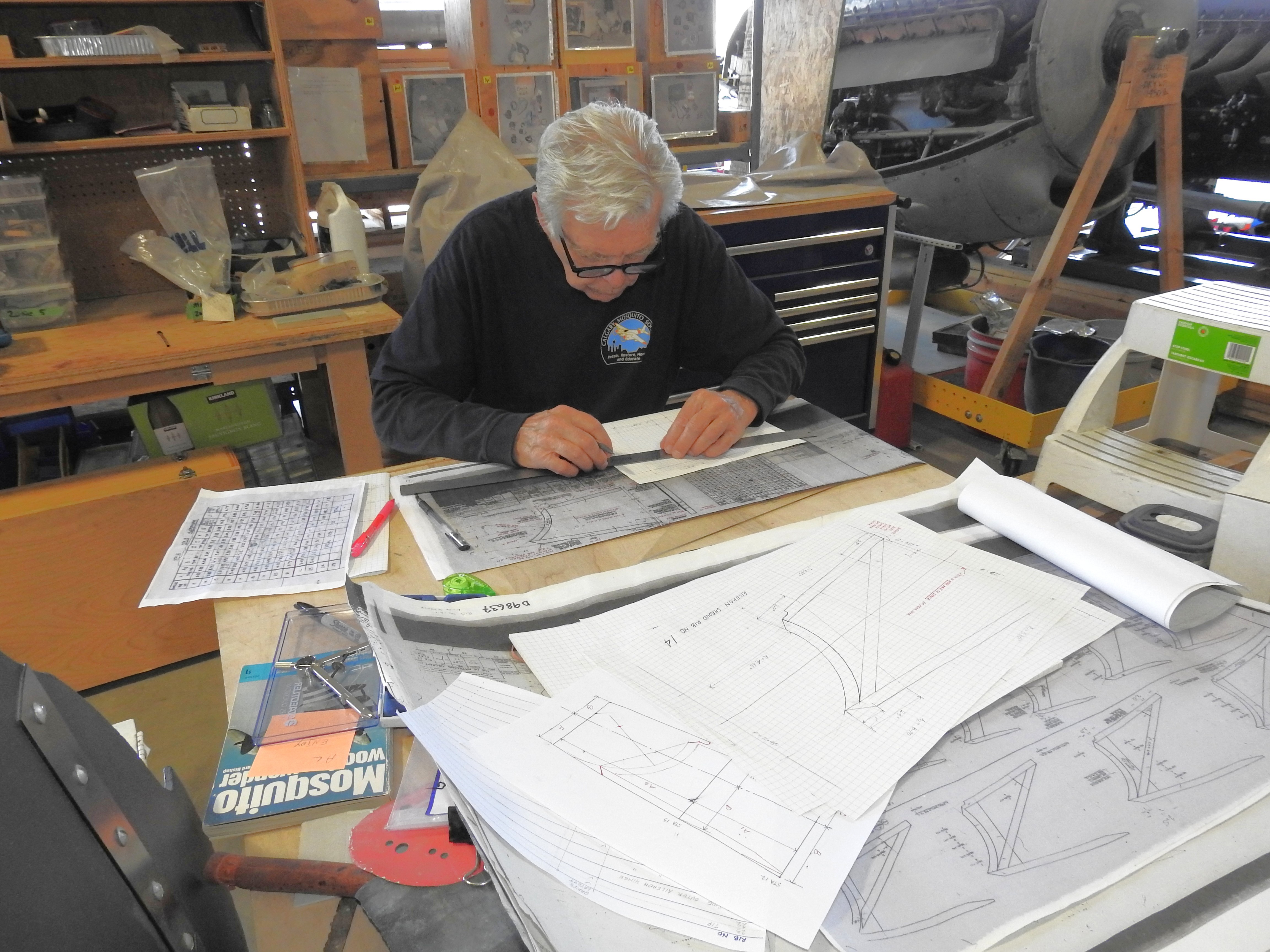
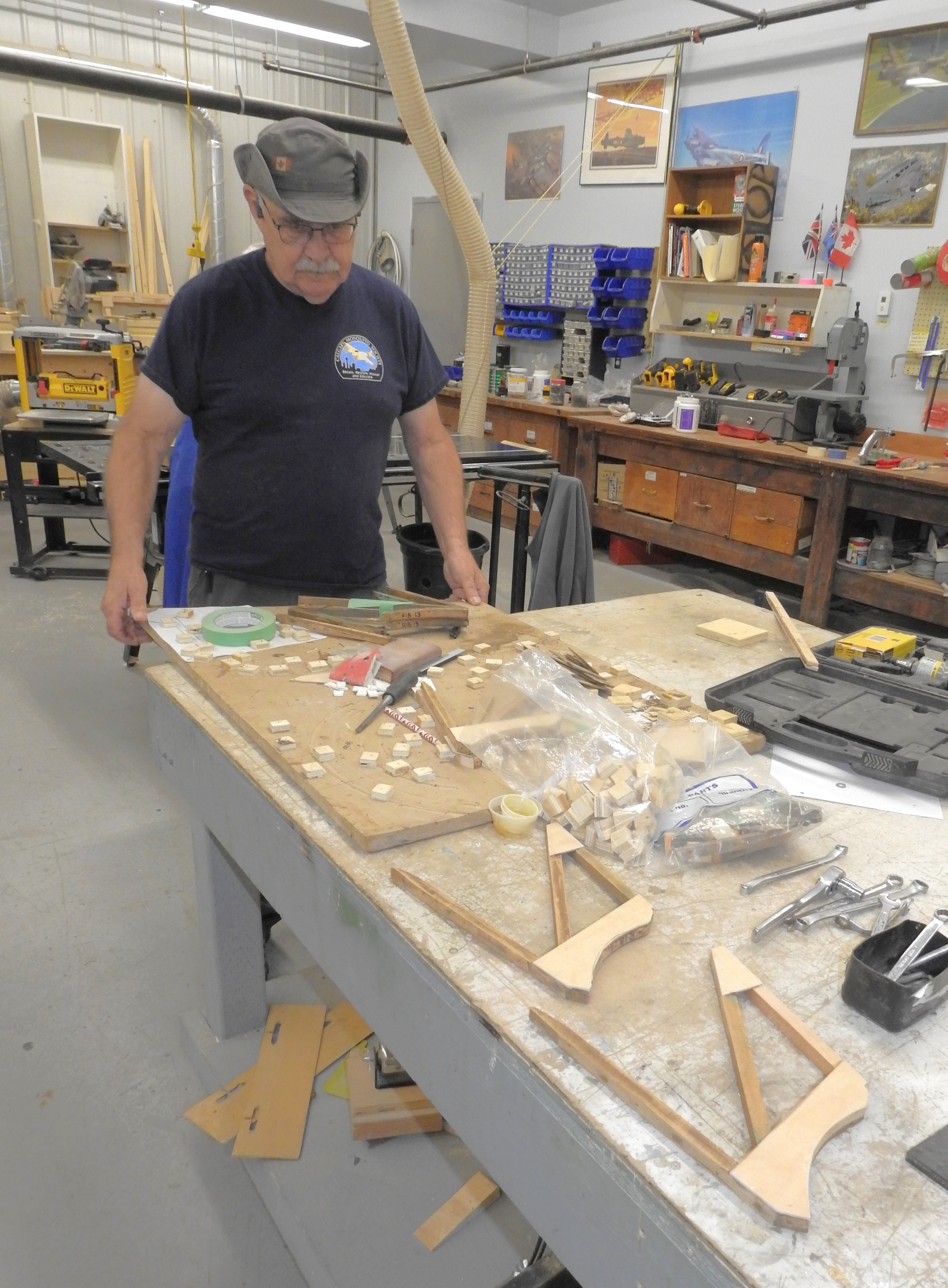
Top, Al P. slaves over drawings of trailing edge wing ribs. Bottom, Gary T. with his jig board and a couple of newly repaired ribs. Note the original spruce sticks with new ply webbing.
As the inventory of all of our parts, spares and acquired parts collections is now complete, Prez Richard is apprenticing under paint master Cam B. to learn the fine art of spraying Endura paint in the Bomber Command Museum's recently completed paint booth. Richard brings his long ago acquired model making airbrush skills to this larger scale process.
Events and Miscellaneous
The third quarter of the year brings the usual abundance of summer event days. Kicking things off was our very own Mosquito Celebration Day on July 18. The deities of weather were more than generous with clear skies and afternoon temps at 33°C.
As usual our hosts at the Bomber Command Museum allowed us to put people into the Lancaster for the morning and afternoon engine runs. The morning run drew the largest crowd for any event held this year at the museum, with their VP Dan Fox estimating over 500 in attendance.
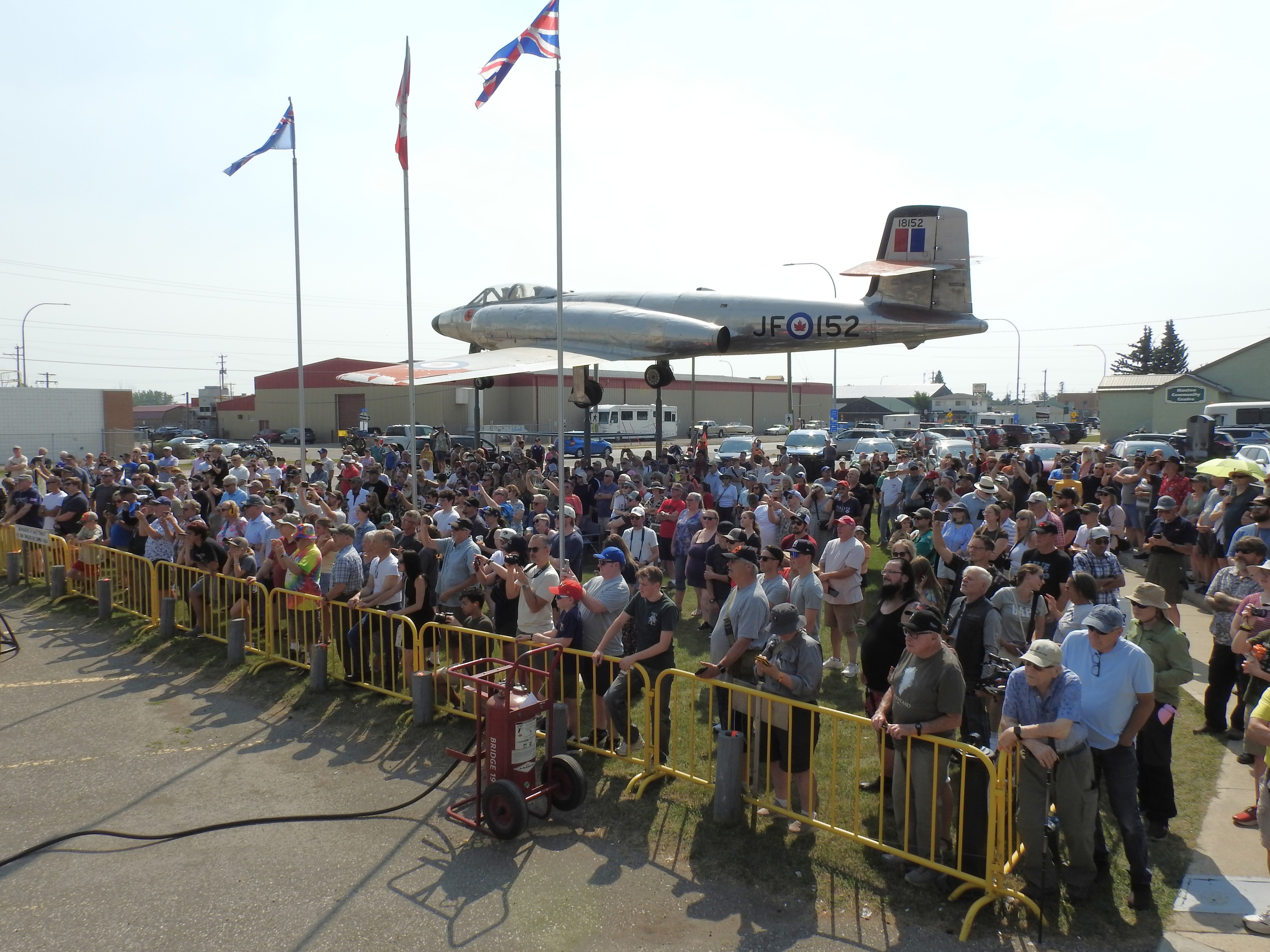
Folks gather for the morning Lancaster engine run. This was the largest turnout for any event this year with Dan Fox estimating the crowd at well over 500.
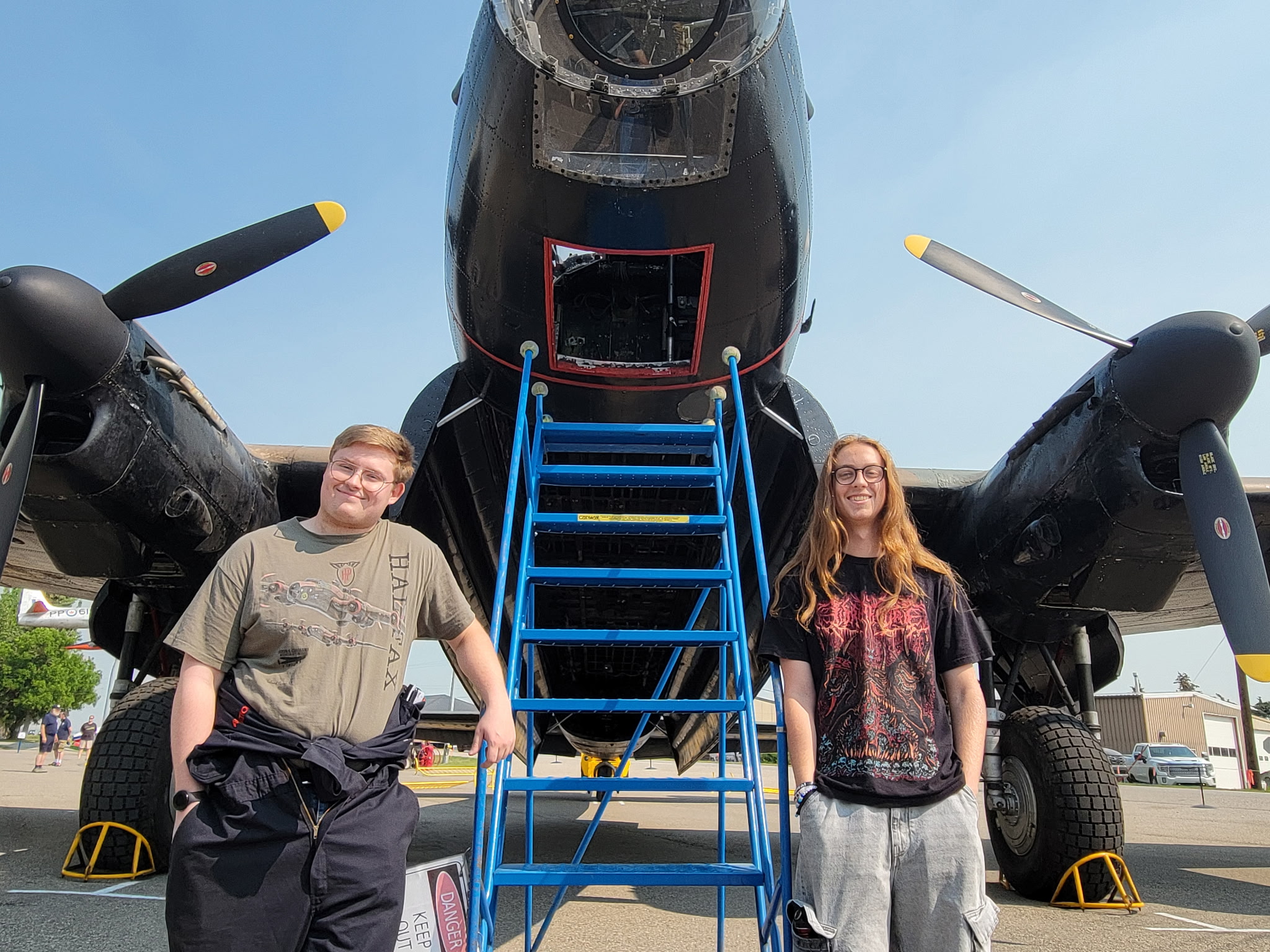
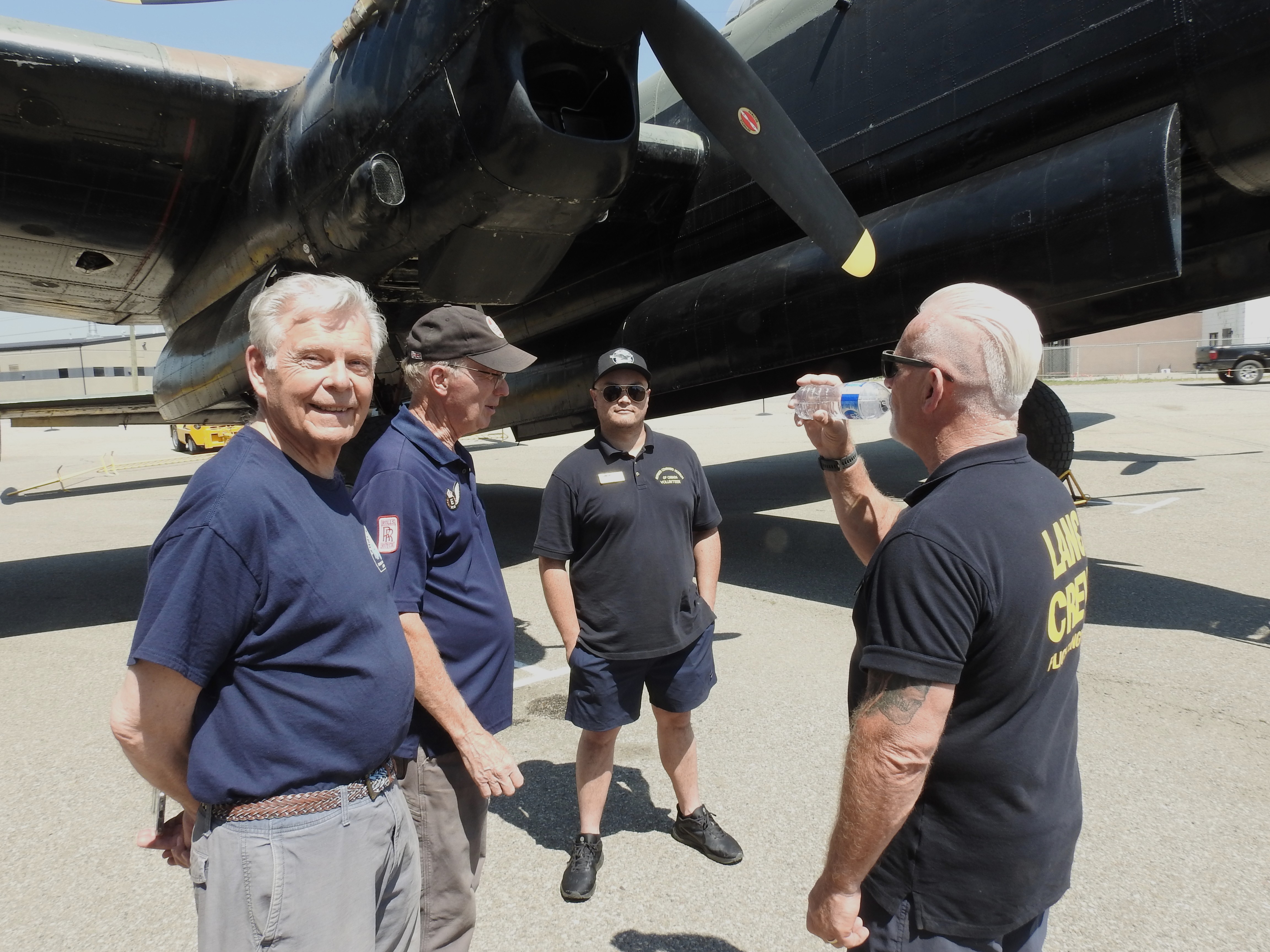
And these were the lucky guys who got to experience the Lancaster engine run from the inside. Top, Jordan F. and Flavio. Bottom, facing the camera is Al P. Check all the smiles! Top photo by Steve Sulis.
We kicked off the noise making by running the Hurricane Merlin engine and then doing so in the afternoon with hard working volunteer and board member Andy W. at the helm for his first time on the throttle.
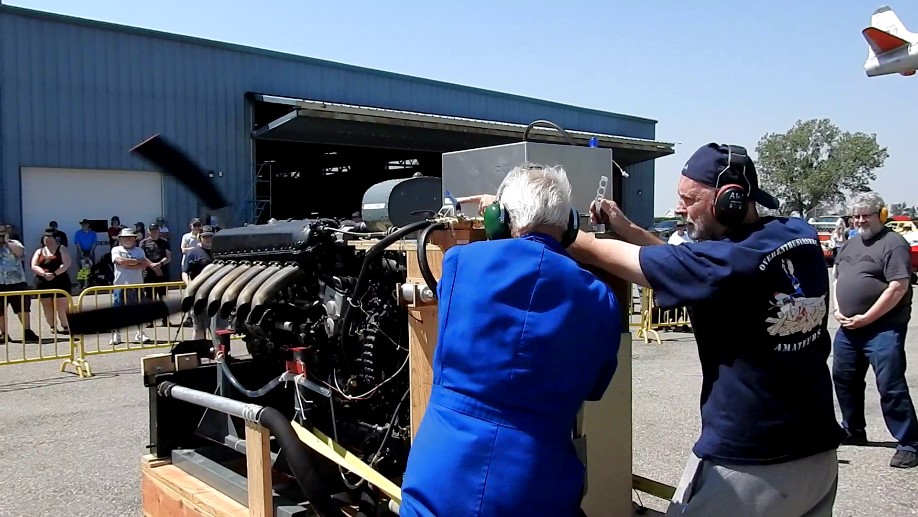
For the afternoon run of our Hurricane Merlin, Andy W. (centre) takes the throttle for the first time. Well earned as he has put in hundreds of hours on the engine overhaul and on the Hurricane over the years. At left is Dick S. managing prime and fuel for the run.
VP Jack M. did his usual restoration update talk for a full house during the lunch hour and Prez Richard wowed the crowd with the story of how a Mosquito ended up in the town of Nanton. All in all, an outstanding day. Big thanks to our hosts at Bomber Command and to our many volunteers.
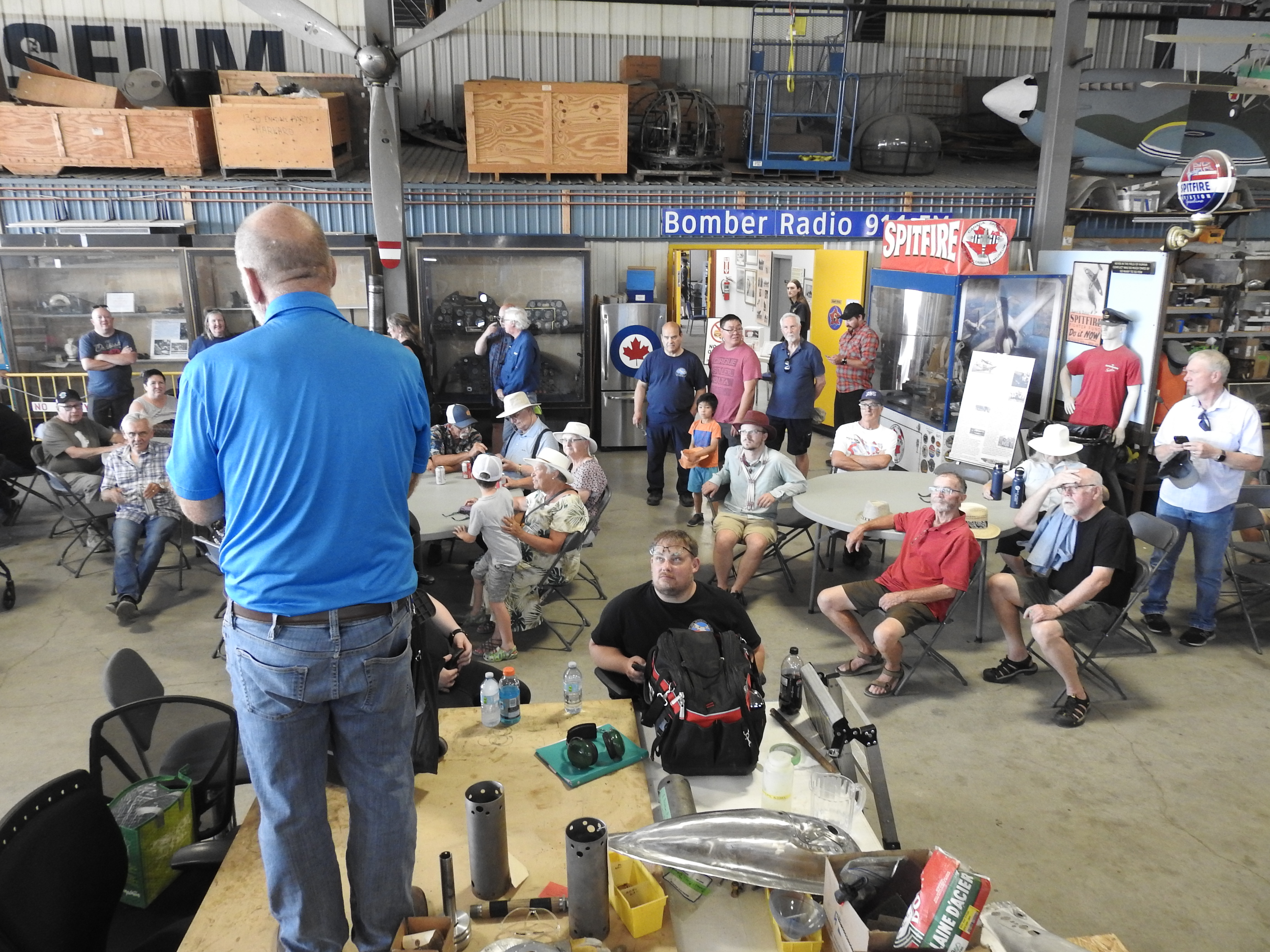
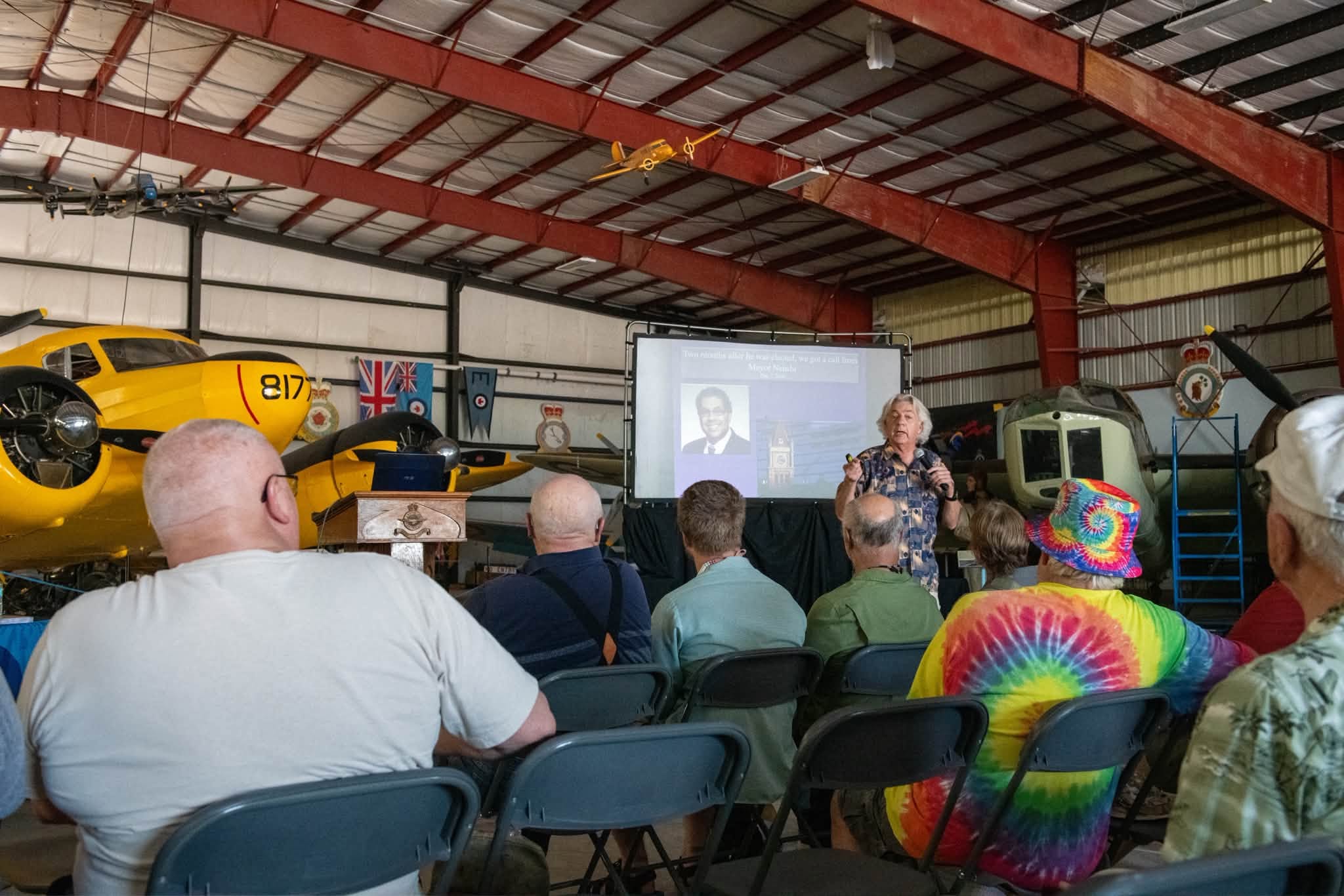
Top, VP Jack, with his back to the Mosquito fuselage, updates the lunch crowd on our restoration progress. Bottom, just above the blazing tie-die, Prez Richard spins the tale of how a rare and beautiful Mosquito made its way to Nanton, AB.
Next event on the calendar was Nanton's Parade Day on Heritage Day, August 3. As usual, lots of post parade visitors stop by the shop to check out our bird as our volunteers fulfill our 'Honour and Educate' mandate.
We had to split our human resources on Saturday, August 22 as we had our fundraising casino to staff, while the museum held its annual Bikes and Bombers event day. Big thanks to Michael H., intrepid volunteer, board member and casino organizer for his fancy footwork in managing some last-minute volunteer shuffling. All shifts were fully staffed and our two days at the casino went smoothly. We await the end of this quarter to hear what our earnings will be. Given that our last earned us $85,000, we expect the same or slightly higher.
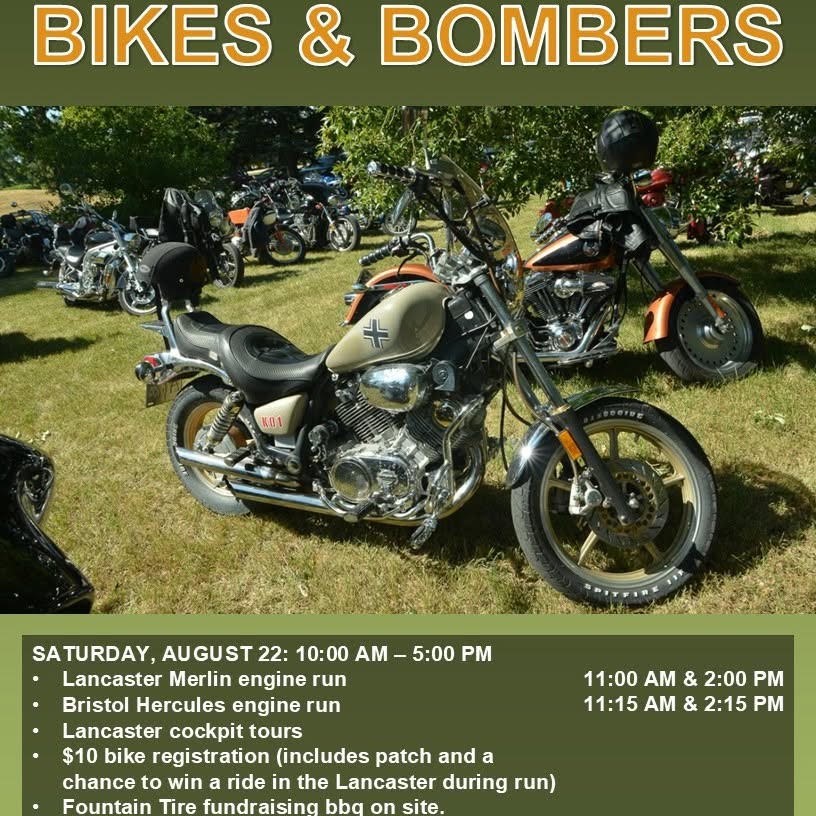
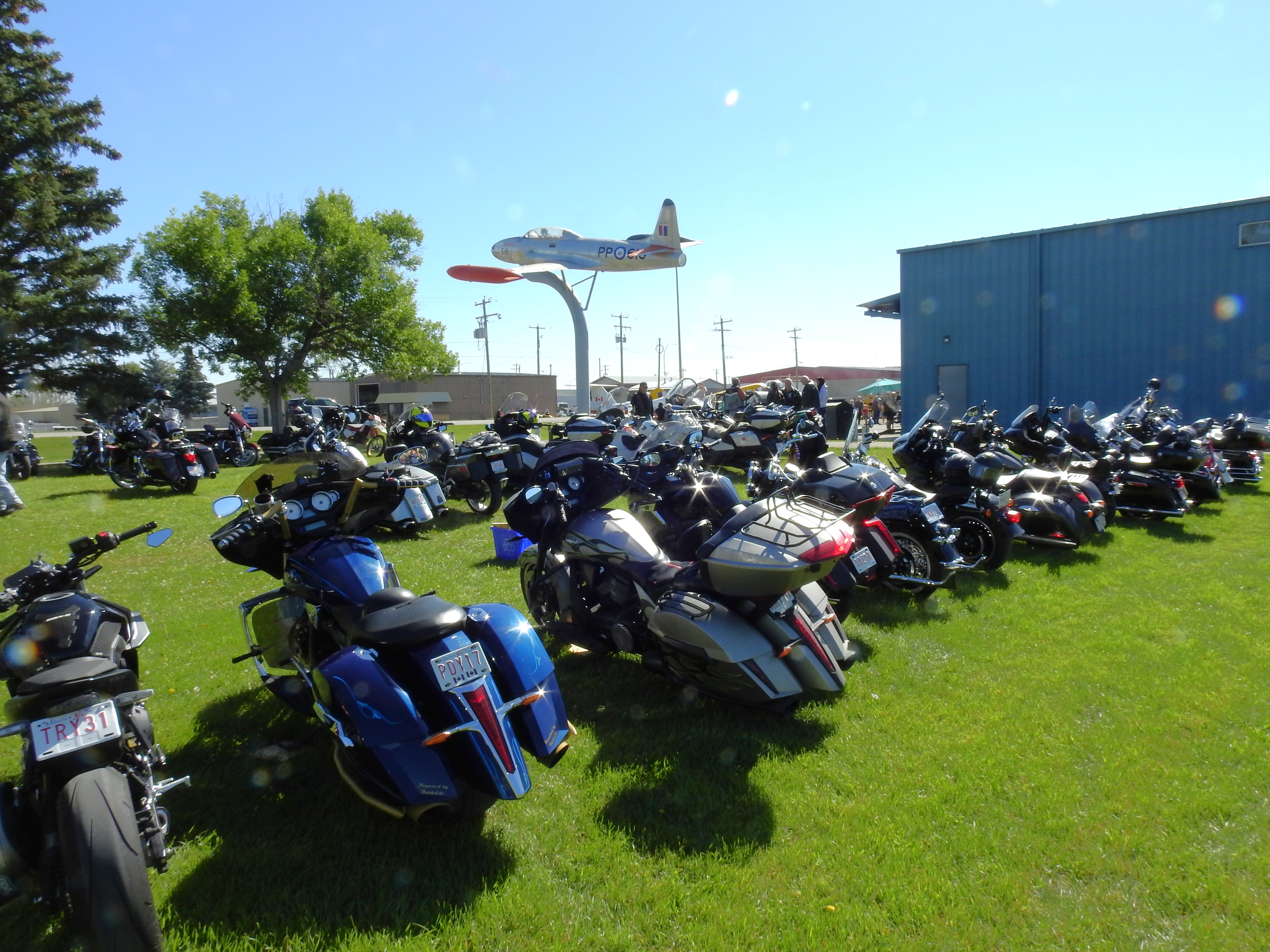
The annual Bikes & Bombers event draws hundreds of bikes (providing the weather favours such things). The bottom photo is just the overflow area! Another great opportunity for our folks to 'Honour and Educate', chat about two and three wheeled machines, and sell some merch.
Despite the casino drawing a lot of our people resources, we still had members on hand to chat with two wheeled visitors and to set up our book, merch and t-shirt sales. Thanks to boardie Bert F. and Mrs. Bev for taking the lead on the latter.
Rounding out the event calendar for the year at Bomber Command was Halifax Day on September 12. Halifax project lead, and the museum's curator, Karl K. brought out key restoration activists from Arnprior, ON and the UK, both of whom chipped in during the afternoon talk in the hangar. The event was highlighted by a night run with the Lancaster; just the second of the year.
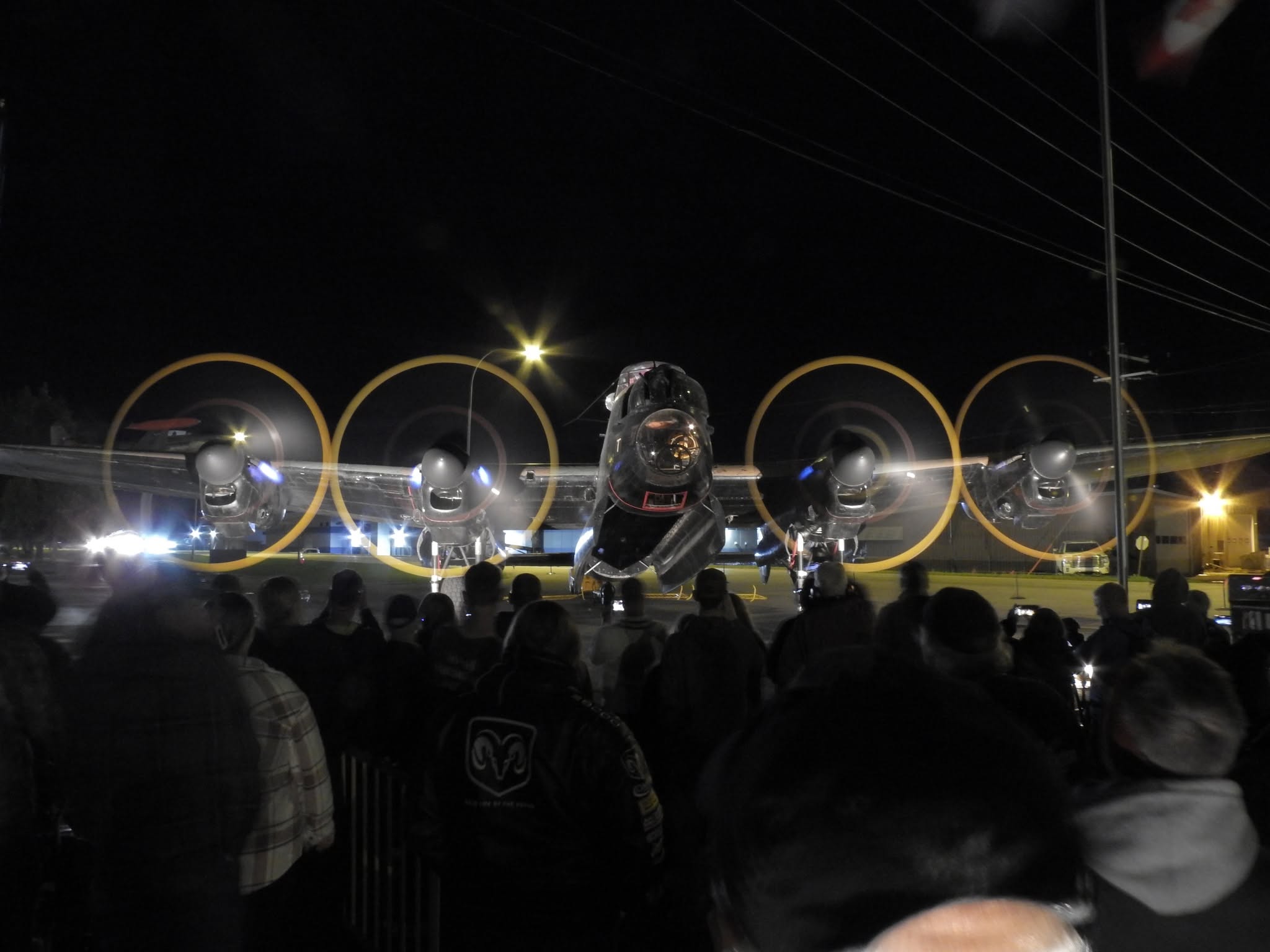
Capping off event season at the Bomber Command Museum is a Lancaster night run. Makes for a long day if you get there at 9 am, but well worth it for this powerful and unique experience.
Early in August we were contacted by the Royal Canadian Legion's, Branch 15 in Cochrane, to set up a table and display as they celebrated the 100th Anniversary of the Legions in Canada. Big thanks to Craig and Laura Garrick for staffing the table for the day. Not sure how they fit the theme, but we were entertained by Civil War reenactors who brought with them a very attention getting cannon which they fired every hour and on any whim throughout the day!
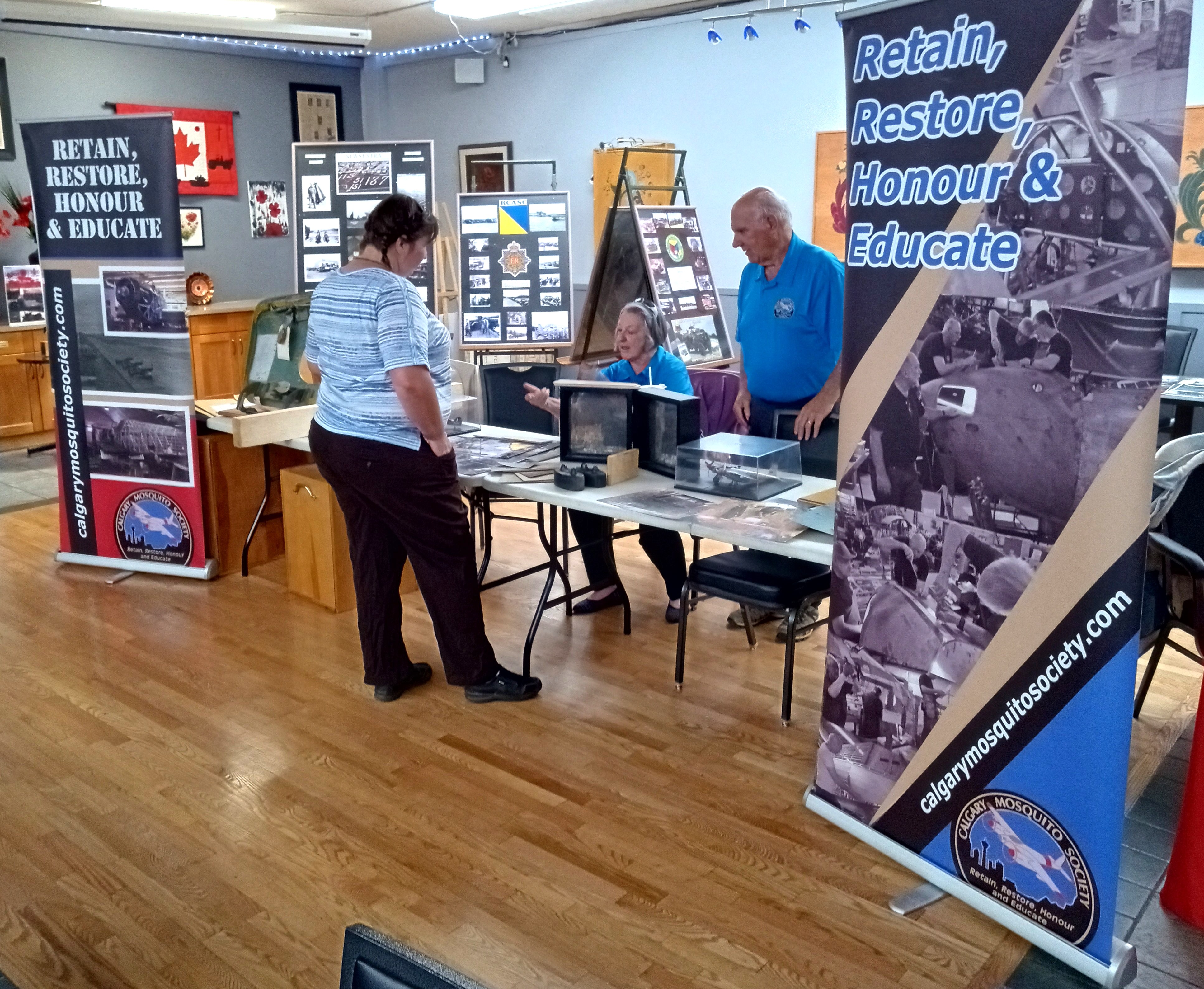
Helping the Royal Canadian Legion, Branch 15 in Cochrane celebrate the 100th Anniversary of the institution in Canada. Big thanks to long time members and volunteers Laura and Craig Garrick for spending the day chatting with folks.
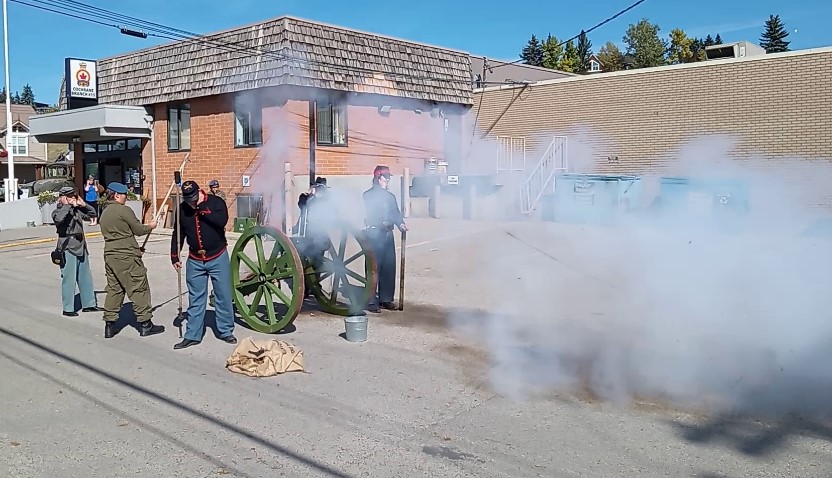
Joining us at the Legion were a group of American Civil War reenactors who brought with them all manner of authentic weapons including this cannon which set off dogs and car alarms through the day. Hellova shock wave as well!
We received a couple of donations this quarter, worthy of a mention and a thanks. Member Dave Makichuk gifted us a lovely art print by Stan Bell of Comox of a Mosquito in flight. Nicely matted and wood framed as well. From member Jeff Robinson of Nelson, BC., we received an original copy of the Lecture Notes for the Mosquito Airframe Instruction Course, dated November 1944 and having been the property of LAC Fred Bailey of Trail, BC when Fred attended the training course at Hatfield during the war. Delightfully, it is filled with pencilled notes by its original owner as he concentrated on the lectures and scribbled reminders to himself. Our thanks to Dave and Jeff.
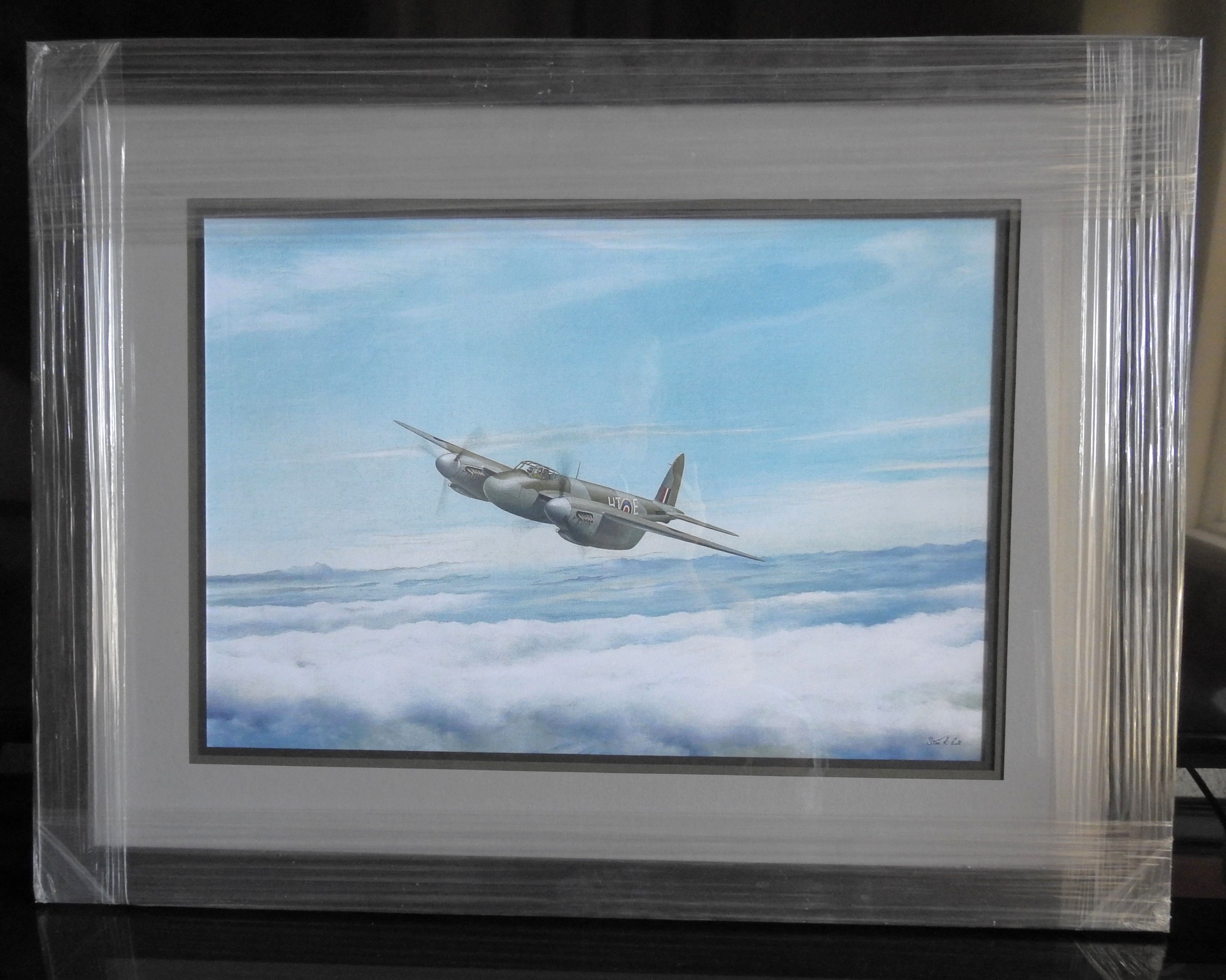
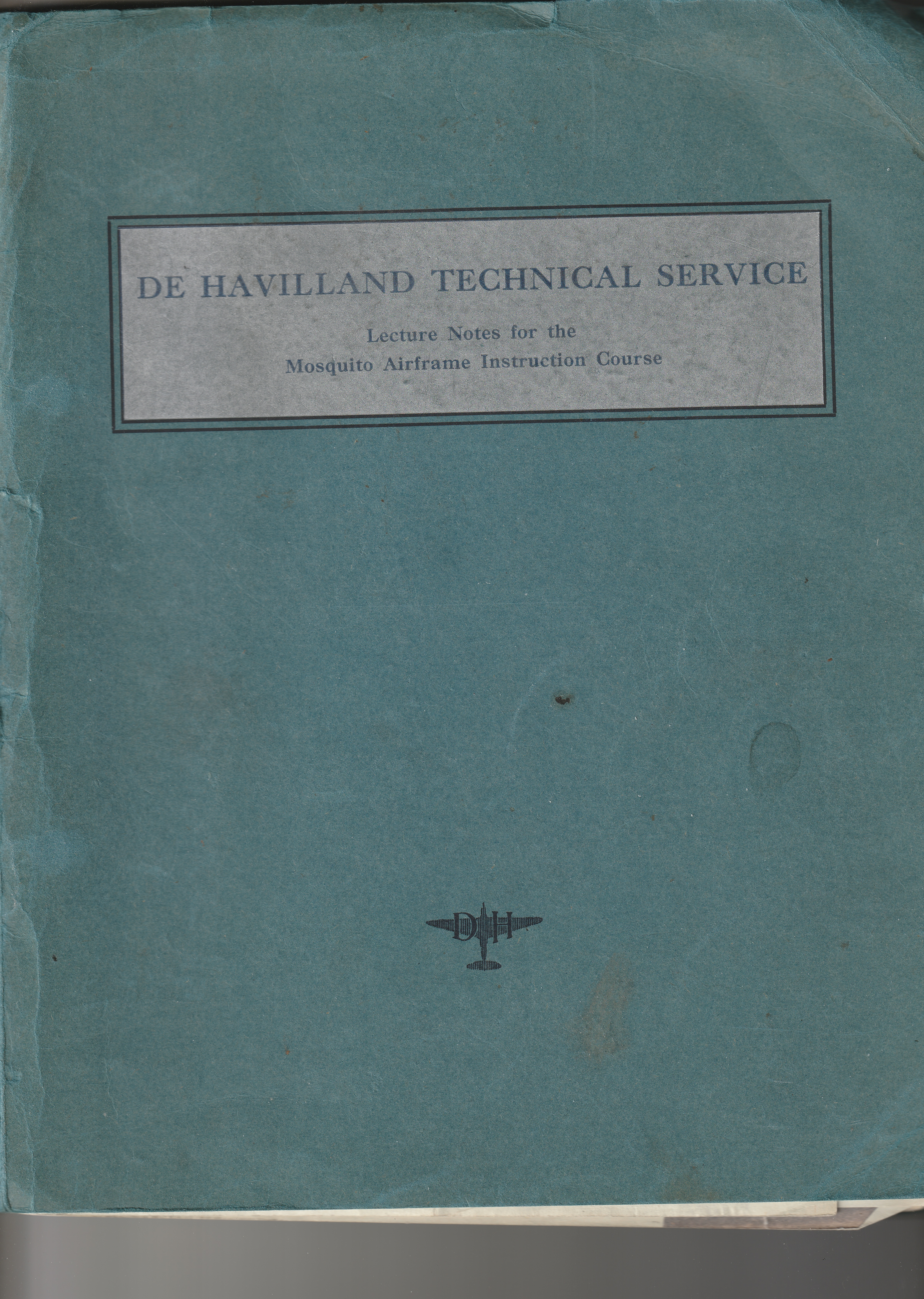
Framed and matted print above donated by Dave Makichuk and wartime airframe repair and maintenance notes donated by member Jeff Robinson. Thanks gents.
We reported last quarter on the AEROPLANE article authored by the Prez, about Spartan Air Services camera operator Roger Tessier. One of our members loved the artwork commissioned for the cover and contacted the magazine's editor who put him onto the artist, who works from his home in Greece. The upshot of it was that artist Antonis Karidis rejigged the image to a landscape format to which we now own the rights. Super sweet! Look for prints and merch bearing this lovely image in the near future.
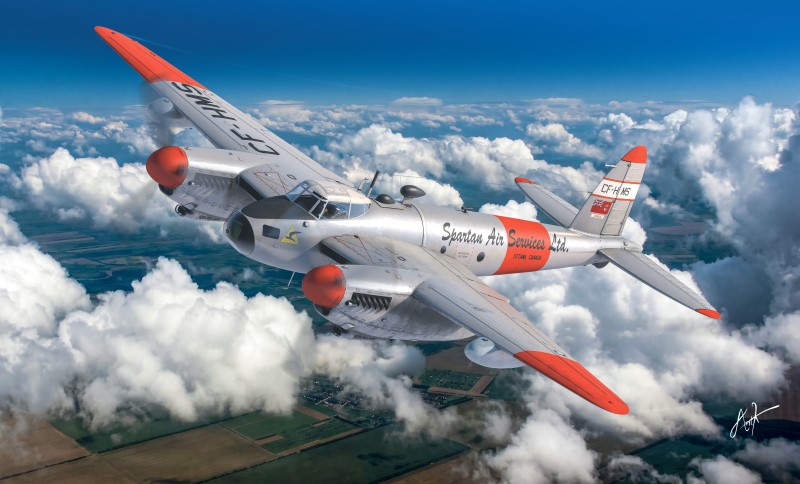
Our Spartan Mossie!

Richard de Boer, President
October 7, 2026

Website - Calgary Mosquito Aircraft Society